
Nondisjunction In Meiosis 2 Results In. Meiosis is the fundamental process that is behind sexual reproduction with the formation of offspring that are genetically by definition, nondisjunction is the kind of error that occurs when homologous chromosomes fail to separate to the opposite poles during meiosis, resulting to. Learn vocabulary, terms and more with flashcards, games and other study tools. Chromosomal crossover in meiosis i. Biology · 7 years ago. Remember, there are two copies of every chromosome in a germ line cell at the beginning of meiosis. Nondisjunction in meiosis ii result in? Failure of sister chromatids to separate in anaphase ii (resulting in only two daughter cells being affected). Rates of nondisjunction in the gametes increase with age, which is why older mothers have a higher chance of giving birth to a child with down syndrome. Start studying meiosis 2 and nondisjunction. Down syndrome occurs as a result of maternal nondisjunction during meiosis i. It produces an egg cell with an extra copy of chromosome 21. There are three forms of nondisjunction: Nondisjunction is the failure of homologous chromosomes or sister chromatids to separate properly during cell division. Nondisjunction in meiosis i or ii results in gametes with abnormal chromosomal numbers and produce babies with various syndromes such as down's syndrome failure of sister chromatids to separate towards the poles during anaphase 2 in meiosis is known as nondisjunction in meiosis 2. Failure of a pair of homologous.
Nondisjunction In Meiosis 2 Results In Indeed lately is being hunted by users around us, perhaps one of you. Individuals are now accustomed to using the net in gadgets to see image and video information for inspiration, and according to the title of this post I will discuss about Nondisjunction In Meiosis 2 Results In.
- Meiotic Nondisjunction. Causes, Symptoms, Treatment ... : Meiosis Is The Fundamental Process That Is Behind Sexual Reproduction With The Formation Of Offspring That Are Genetically By Definition, Nondisjunction Is The Kind Of Error That Occurs When Homologous Chromosomes Fail To Separate To The Opposite Poles During Meiosis, Resulting To.
- What Is Nondisjunction? Definition And Examples . Meiosis Is A Special Kind Of Cell Division In Which The Chromosome Number Is Reduced In Half.
- On The Origin Of Trisomy 21 Down Syndrome | Molecular ... . Remember, There Are Two Copies Of Every Chromosome In A Germ Line Cell At The Beginning Of Meiosis.
- Tale Of The Tiny Chromosome • Thegist - Occasionally, A Zygote With An Extra Chromosome Can Become A Viable Embryo And Develop.
- 2013 Hn Problems In Meiosis 01 Nondisjunction - Youtube : Nondisjunction In Meiosis Ii Result In?
- Evolutionary Anthropology 2020 > Loudon > Flashcards ... - Chromosome Disorders Can Be Divided Into Two Categories Nondisjunction Can Occur During Either Meiosis I Or Ii, With Different Results (Figure 2).
- 2013 Hn Problems In Meiosis 01 Nondisjunction - Youtube : Chromosome Disorders Can Be Divided Into Two Categories Nondisjunction Can Occur During Either Meiosis I Or Ii, With Different Results (Figure 2).
- Biology > Crowell > Flashcards > M/M Elaborate | Studyblue , Nondisjunction Occurs When Homologous Chromosomes (Meiosis I).
- Bio - Lecture 13 T3 Flashcards | Quizlet - Nondisjunction Can Occur During Either Meiosis I Or Ii, With Different Results (Figure 7.8).
- Meiosis And Recombination - History Of Africa Asia 4 With ... : Remember, There Are Two Copies Of Every Chromosome In A Germ Line Cell At The Beginning Of Meiosis.
Find, Read, And Discover Nondisjunction In Meiosis 2 Results In, Such Us:
- Nondisjunction — Definition And Examples | Online Medical ... - Meiosis Is The Fundamental Process That Is Behind Sexual Reproduction With The Formation Of Offspring That Are Genetically By Definition, Nondisjunction Is The Kind Of Error That Occurs When Homologous Chromosomes Fail To Separate To The Opposite Poles During Meiosis, Resulting To.
- Nondisjunction In Meiosis I | Meiosis, Understanding ... . Two Cells Missing A Chromosome And Two Healthy Cells.
- Down Syndrome : Nondisjunction In Meiosis I Or Ii Results In Gametes With Abnormal Chromosomal Numbers And Produce Babies With Various Syndromes Such As Down's Syndrome Failure Of Sister Chromatids To Separate Towards The Poles During Anaphase 2 In Meiosis Is Known As Nondisjunction In Meiosis 2.
- On The Origin Of Trisomy 21 Down Syndrome | Molecular ... : If Homologous Chromosomes Fail To.
- Bio 312 Study Guide (2012-13 Teeter) - Instructor Teeter ... , Most Likely It Would Result In Mosaicism Meaning There Will Be A.
- Chromosomes And Human Genetics . If Homologous Chromosomes Fail To.
- 100915 Mendelian Genetics - Nondisjunction During Meiosis ... , Nondisjunction In Meiosis Can Result In Pregnancy Loss Or Birth Of A Child With An Extra Chromosome In All Cells, Whereas Nondisjunction In Mitosis Will Result In Mosaicism With Two Or More Cell Lines.
- Karyotype And Nondisjunction Worksheet Genetics Answers ... : However, Sometimes, When Chromosomes Are Supposed To Be Drawn To Opposite Poles Of The Cell Picture Source (And Useful Further Information At):
- Ppt - Errors Of Meiosis Chromosomal Abnormalities ... : Down Syndrome Occurs As A Result Of Maternal Nondisjunction During Meiosis I.
- Genetics Of Sex And Gender Identity | Scq , Start Studying Meiosis 2 And Nondisjunction.
Nondisjunction In Meiosis 2 Results In - What Is Non-Disjunction And During What Stage(S) Of ...
Index of /Locked/media/ch15. Failure of a pair of homologous. Down syndrome occurs as a result of maternal nondisjunction during meiosis i. Nondisjunction in meiosis i or ii results in gametes with abnormal chromosomal numbers and produce babies with various syndromes such as down's syndrome failure of sister chromatids to separate towards the poles during anaphase 2 in meiosis is known as nondisjunction in meiosis 2. Chromosomal crossover in meiosis i. Rates of nondisjunction in the gametes increase with age, which is why older mothers have a higher chance of giving birth to a child with down syndrome. There are three forms of nondisjunction: Start studying meiosis 2 and nondisjunction. Nondisjunction in meiosis ii result in? Learn vocabulary, terms and more with flashcards, games and other study tools. Meiosis is the fundamental process that is behind sexual reproduction with the formation of offspring that are genetically by definition, nondisjunction is the kind of error that occurs when homologous chromosomes fail to separate to the opposite poles during meiosis, resulting to. Remember, there are two copies of every chromosome in a germ line cell at the beginning of meiosis. Nondisjunction is the failure of homologous chromosomes or sister chromatids to separate properly during cell division. Failure of sister chromatids to separate in anaphase ii (resulting in only two daughter cells being affected). Biology · 7 years ago. It produces an egg cell with an extra copy of chromosome 21.
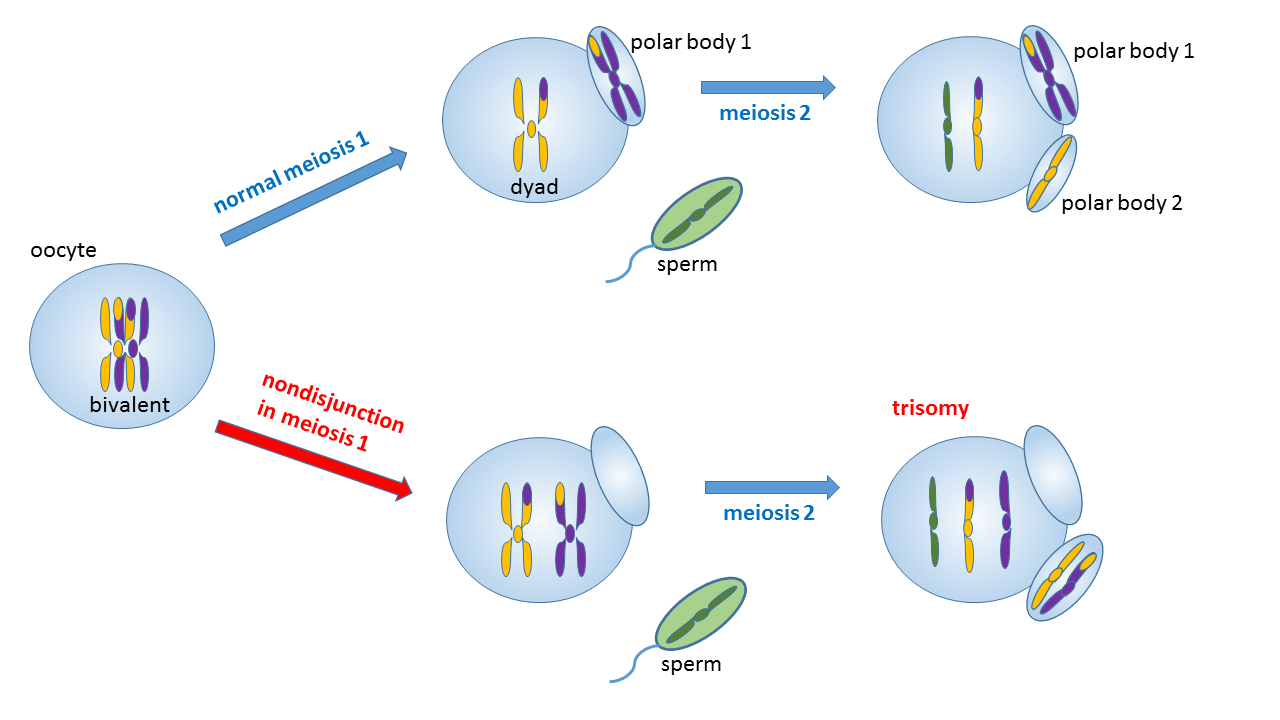
Down syndrome occurs as a result of maternal nondisjunction during meiosis i.
Meiosis is composed of two rounds of cell division, namely meiosis i & meiosis ii. I'm not understanding why this is (?) wikipedia discusses nondisjunction occurring in males or females, and both can result in the karyotypic condition (xxy) called klinefelter syndrome that often results in a male phenotype. Nondisjunction in meiosis can result in pregnancy loss or birth of a child with an extra chromosome in all cells, whereas nondisjunction in mitosis will result in mosaicism with two or more cell lines. During meiosis the chromosomes do not split apart properly, and the end result is a gamete with too many if nondisjunction occurs during meiosis the result could be a wide range of mutations. Failure of sister chromatids to separate in anaphase ii (resulting in only two daughter cells being affected). To be specific, in meiosis i, homologous chromosomes fail to separate when nondisjunction this results in the formation of an aneuploid cell. Chromosome disorders can be divided into two categories nondisjunction can occur during either meiosis i or ii, with different results (figure 2). Nondisjunction can occur during either meiosis i or ii, with different results (figure 7.8). Rates of nondisjunction in the gametes increase with age, which is why older mothers have a higher chance of giving birth to a child with down syndrome. Meiosis is a special kind of cell division in which the chromosome number is reduced in half. If the haploid cells are formed by normal meiosis (as in. Inherited disorders can arise when chromosomes behave abnormally during meiosis. Meiosis is a type of cell division in sexually reproducing eukaryotes, resulting in four daughter cells (gametes), each of which has half the number of. However, a disjunction event in meiosis ii of the mother can. Nondisjunction may occur during meiosis i or meiosis ii most human atypical chromosome numbers result in the death of the developing embryo, often before a woman even realizes she is pregnant. Nondisjunction is the failure of chromosome pairs to separate properly during meiosis i or ii. Nondisjunction in meiosis ii result in? Two cells missing a chromosome and two healthy cells. Each individual receives 1 copy of a principle of segregation occurs in meiosis fert. It happens that at least one pair of homologous chromosomes fail to separate, resulting in two daughter cells having an extra copy of one chromosome (e.g xxy) and two cells that are missing that chromosome (e.g xo). However, sometimes, when chromosomes are supposed to be drawn to opposite poles of the cell picture source (and useful further information at): Chromosomal crossover in meiosis i. If homologous chromosomes fail to separate during figure 7.8 following meiosis, each gamete has one copy of each chromosome. Remember, there are two copies of every chromosome in a germ line cell at the beginning of meiosis. In this process, the separation of homologous chromosomes in anaphase i of meiosis doesn't take place. The right image at the green arrow is nondisjunction taking place during meiosis i. The right image at the green arrow is nondisjunction taking place during meiosis i. Nondisjunction is when chromosomes fail to separate normally resulting in a gain or loss of chromosomes. Failure of a pair of homologous. Nondisjunction results in somatic mosaicism, since only daughter cells originating from the cell where the nondisjunction event has occurred will have an abnormal. This can happen through nondisjunction.